


Larmor mmWave Systems receives CHF 40,000 from Venture Kick to accelerate gyrotron technology for fusion
09.07.2026
Larmor mmWave Systems receives CHF 40,000 from Venture Kick to advance its high-power microwave systems for fusion energy and deep geothermal drilling. Based on gyrotron technology, the company's solutions combine advanced hardware with design and integration expertise to help accelerate the deployment of next-generation energy and industrial applications.
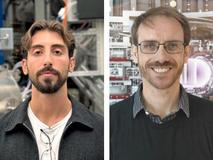 Co-Founder Massimo Carpita, Mack VanRossem
|
 |
What was the first real signal that your solution worked outside the lab or pitch deck, and what did that moment change for you?
Unlike many startups, we didn’t start by looking for product-market fit. We founded Larmor because we had experienced the bottlenecks ourselves while working on major fusion programs like ITER and EUROfusion. We knew the demand for high-power microwave systems would far exceed supply.
The real validation came when we spoke with customers. They showed us that, beyond the hardware, they urgently needed design and integration support. That helped us broaden our offering and better understand where we create the most value.
Can you briefly describe your project and where it stood when you entered Venture Kick?
Larmor mmWave Systems is an EPFL and Swiss Plasma Center spin-off developing high-power microwave systems based on gyrotron technology for fusion energy and deep geothermal drilling, with applications in wireless power, materials processing, and imaging.
When we entered Venture Kick, we had our founding team, advisory board, initial IP, and early customer discussions in place. Since then, we’ve advanced our IP, built a pipeline of key hires, moved toward our first design contract, and opened strategic partnerships with major industry players.
How has the direction of your product/service/product strategy changed since working with the Venture Kick Team?
Venture Kick helped us turn a strong technical vision into a venture-ready business. We refined our market positioning, clarified our competitive advantage, and built a more realistic financial and fundraising strategy.
We also sharpened our go-to-market approach, starting with design and integration services, then moving to co-developed demo units before scaling to full-system pilots and pre-orders.
How will the Stage 2 funding help you advance your project concretely?
Stage 2 funding allows us to keep advancing on multiple fronts as we prepare for our pre-seed round. It supports continued IP development, technical work toward our first system, and the legal and operational steps needed to incorporate the company and finalize our first contracts.
It will also fund customer visits, industry outreach, and partnership development, helping us convert existing interest into signed agreements and build a strong foundation for growth.
